2027 Presidential Campaign So Far: Issues And Controversies
It has been 95 days since the 2027 presidential campaign kicked off and 55 days until the January 16 elections. PHILIP IBITOYE examines the strange finds en route to the all-important poll, rising political violence and intolerance, protracted legal battles, and seemingly unending opposition merger talks shaping the race so far.
With 55 days to the January 16, 2027, presidential election, campaigns are in top gear as 18 candidates jostle for Nigeria’s highest seat of power. Since the Independent National Electoral Commission (INEC) gave the nod for the presidential campaign to kick off on August 19, 2026, the Nigerian electorate has been treated to different political dishes, either tasty or otherwise.
Although the campaign got off to a slow start with most campaign councils not getting inaugurated until October, it has intensified in recent weeks with rhetoric rather than constructive policy statements dominating the political sphere. As the incumbent, President Bola Tinubu, defends his record and promises future prosperity, his opponents have repeatedly cast the incumbent as a failed leader who has to go for the country to have a chance at success.But it is not only words that have defined this campaign. Nigeria has a long history of electoral violence that predates the Fourth Republic and dates back to the turbulent post-independence politics of the early 1960s. Every election cycle since the disputed federal elections of 1964 and the regional elections of 1965 has seen varying degrees of violence that result in deaths and destruction, and the 2027 campaign has been no exception.
According to the National Peace Committee’s (NPC) monitoring report, covering August 19 to October 27, there were 109 breaches of the National Peace Accord across 26 states and the Federal Capital Territory in just 10 weeks. Recall that a day before the campaign kicked off, the NPC had brought political candidates and parties together in Abuja to sign a peace accord committing them to issue-based campaigns ahead of the 2027 general election.
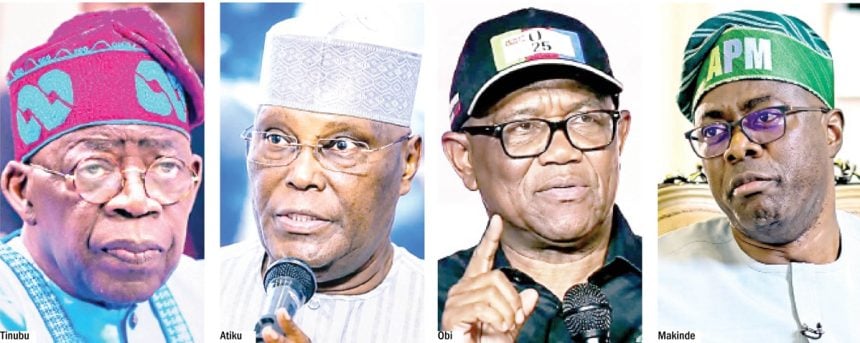
The candidates, belonging to various political parties, including the All Progressives Congress (APC), Nigeria Democratic Congress (NDC), Social Democratic Party (SDP), Peoples Redemption Party (PRP), Labour Party (LP), and African Action Congress (AAC), pledged to shun violence, hate speech, misinformation, personal attacks and other conduct capable of undermining the electoral process. But some major political actors, including former Vice-President Atiku Abubakar and Oyo State Governor Seyi Makinde, were conspicuously absent from the ceremony. Atiku is the presidential candidate of the African Democratic Congress (ADC), while Makinde is the presidential candidate of the Allied Peoples Movement (APM).
The ADC spokesperson, Bolaji Abdullahi, defended the party’s decision to snub the accord as a protest against what he described as the failure of the process to effectively respond to electoral violence. He argued that similar peace agreements had been signed during previous election cycles without, in the ADC’s view, sufficient action when political violence occurred.
“We’ve been signing this thing year in, year out; every election cycle, we sign in support of this commitment. Things still happen; people still get killed, harassed, like in the case of Osun, but we don’t hear the Peace Committee say anything,” Abdullahi said.True to the ADC’s prediction, the peace accord has largely failed to forestall political violence in the past 95 days of this campaign, as the NPC’s own data has shown. In an interview with Sunday Tribune, the Head of Elections at Kimpact Development Initiative (KDI), Umar Dan’Assabe Muhammed, disclosed that the group had tracked more than 240 cases of electoral violence resulting in over 30 deaths since January 1.
“At KDI, we have been tracking pre-election violence and pre-election security generally since January 1 up to this point, and so far we have been able to track over 240 election-related violent incidents, with 31 fatalities so far,” Muhammed said.Policy fights over economic hardship, fuel subsidy, and electricity.
The presidential campaign has predictably seen plenty of fights over fuel subsidy, electricity, and the economy as the cost-of-living crisis has bitten harder, fuel prices have remained high, and poor electricity supply has persisted.
At the presidential campaign flag-off of the ruling APC in Kaduna on October 24, President Tinubu, who is seeking re-election, acknowledged that his economic and fiscal reforms had led to pains he described as temporary. But he promised that the next stage of his economic agenda is prosperity for Nigerians. The president repeated the same promise at the latest rally in Ibadan, the Oyo State capital, on Saturday, November 21.
However, Tinubu’s rivals have repeatedly dismissed his promises of economic prosperity as empty, asserting that the president cannot fix what he broke. In a statement on November 7, Atiku accused his former political ally of “creat[ing] poverty” and “insult[ing] the people suffering from it.” “You attack my Affordable Life campaign, but the people you are really attacking are the millions of Nigerians desperate for relief from your failed leadership,” the ADC presidential candidate said, promising to bring succour to Nigerians suffering economic hardship.
Similarly, Obi, who has so far favoured town halls over open-space rallies, has knocked Tinubu for allegedly plunging the country into economic hardship.“In the last three years, President Tinubu has foisted on Nigeria a reign of corruption and duplicity, resulting in extreme poverty. Today, President Tinubu has made history as the leader who has created the largest number of poor people in the world. This year, he has made about 16 million Nigerians extremely poor,” he said on October 27 after the inauguration of his party’s presidential campaign council (PCC), while positioning himself as the candidate who can rescue the country.
The Makinde-Daura Presidential Campaign Organisation (MDPCO) has also criticised the economic policies of President Tinubu’s administration, accusing it of prioritising corporate interests and government revenues over the welfare of ordinary Nigerians. The campaign, which says it aims to “Reset Nigeria”, said an APM administration would prioritise expanded economic opportunities, fiscal discipline, and microeconomic and macroeconomic stability capable of improving the living conditions of Nigerians.